

Loading connection devices mainly include multi-dimensional force sensor calibration loading devices, active magnetic particle loaders, multi-functional spatial loading devices, mechanical loading tools, and heavy-duty connectors for industrial automation.
Multi-dimensional force sensor on-site rapid calibration loading device: This device can achieve continuous loading of any force. It applies varying loading forces to the sensor under test through three motors controlling the first and second loading components, featuring high precision and continuity.
Active magnetic particle loader: Suitable for testing scenarios with torque less than 300 N·m and force less than 10 kN. It consists of a motor, reducer, magnetic particle clutch, and force gauge. It supports automatic loading and precise control of load parameters, with a compact structure and convenient maintenance.
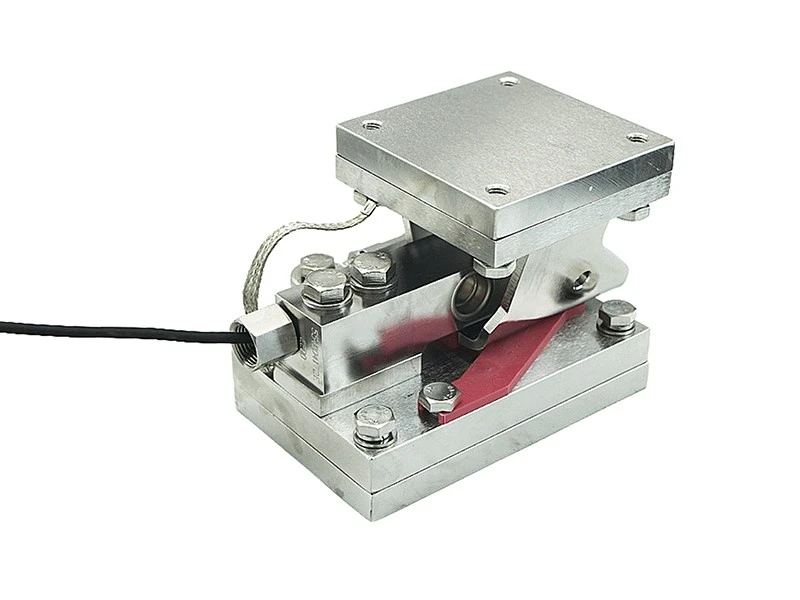
Multi-functional spatial loading device: Used for physical performance testing, it features an eight-channel hydraulic control system, a maximum vertical loading capacity of 20,000 kN, and a horizontal or oblique loading capacity of ±2,000 kN. It supports various loading methods such as proportional, sequential, and constant load.
Commonly used mechanical loading tools include chains, winches, turnbuckles, turnbuckles, screw jacks, and springs, with screw jacks being a typical mechanical loading tool.
Heavy-duty connectors, while not traditional "loading" equipment, are key components for electrical and signal connections in automated production lines. They enable modular pre-installation, improving deployment efficiency and connection reliability, and are widely used in machinery manufacturing, rail transportation, and power systems.